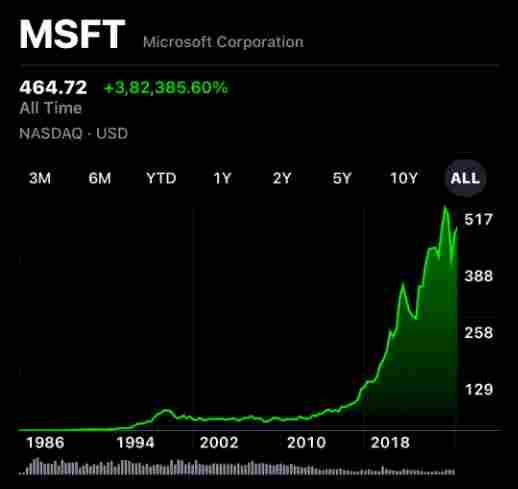
Goldman Sachs has added Microsoft Corporation (NASDAQ: MSFT) to its prestigious U.S. Conviction List, reaffirming its confidence in the technology giant as artificial intelligence continues to reshape the global software industry.
The Wall Street investment bank maintained its Buy rating on Microsoft and reiterated a $640 price target, suggesting the stock could rise by nearly 38% from its current trading level. The move comes as Goldman Sachs believes Microsoft is entering a new phase of AI driven growth, with improving cloud performance and stronger monetisation of its artificial intelligence products.
The latest portfolio reshuffle also saw Goldman Sachs add five other companies to its Conviction List while removing four stocks, including semiconductor giant Broadcom (NASDAQ: AVGO).
What Is Goldman Sachs’ U.S. Conviction List?
Goldman Sachs’ U.S. Conviction List is a carefully selected group of stocks that the firm’s analysts believe offer the strongest investment opportunities over the medium to long term.
Companies added to the list are expected to outperform the broader market based on their financial outlook, competitive advantages, earnings growth and long term business fundamentals.
For investors, inclusion on the Conviction List often signals a higher level of confidence than a standard Buy rating.
Why Goldman Sachs Is Bullish on Microsoft
According to Goldman Sachs analyst Gabriela Borges, Microsoft’s investment story is evolving as the artificial intelligence market matures.
Rather than focusing only on building powerful AI models and expensive computing infrastructure, businesses are increasingly looking for practical ways to integrate AI into their daily operations. Borges believes Microsoft is well positioned to benefit from this next stage because of its deep integration of AI across products such as Microsoft 365, Azure and Copilot.
She noted that the company’s latest quarterly results demonstrated meaningful progress after a period of weaker relative performance.
Among the key positives highlighted were:
- Faster growth in Microsoft’s Azure cloud platform.
- Improving economics of its artificial intelligence business.
- Growing monetisation of Microsoft Copilot.
- Stronger long term earnings outlook.
These developments, according to Goldman Sachs, suggest Microsoft’s AI investments are beginning to generate stronger financial returns.
Azure Continues to Drive Growth
Microsoft Azure remains one of the company’s biggest growth engines.
As organisations continue migrating workloads to the cloud while adopting AI powered applications, demand for Azure’s infrastructure has remained strong.
Cloud computing has become the backbone of artificial intelligence because businesses require enormous computing power to train, deploy and manage AI applications.
Microsoft’s leadership in enterprise software gives it an advantage by allowing customers to combine cloud services, productivity tools and artificial intelligence within a single ecosystem.
This strategy has helped Azure remain one of the fastest growing cloud platforms globally.
Copilot Could Become a Major Revenue Driver
Another area attracting investor attention is Microsoft Copilot, the company’s AI assistant integrated across Microsoft 365, Windows, GitHub and other products.
Businesses are increasingly adopting Copilot to automate repetitive tasks, generate reports, analyse data and improve workplace productivity.
Goldman Sachs believes the growing commercial adoption of Copilot could become one of Microsoft’s most important revenue drivers over the next several years as more organisations incorporate AI into everyday business operations.
Goldman Sachs Expects Faster Earnings Growth
One of the strongest points in Goldman Sachs’ investment thesis is Microsoft’s long term earnings outlook.
The bank expects earnings per share growth to accelerate significantly over the coming years.
According to Gabriela Borges, earnings growth could increase from approximately 12 percent in fiscal 2027 to more than 20 percent by fiscal 2029 as Microsoft’s AI investments mature and operating efficiencies improve.
If this projection materialises, Microsoft could strengthen its position as one of the world’s most profitable technology companies.
Why Broadcom Was Removed
While Goldman Sachs did not downgrade Broadcom, the firm’s decision to remove the semiconductor company from its Conviction List reflects changing investment priorities.
Broadcom has been one of the biggest beneficiaries of the AI boom due to demand for networking equipment and custom AI chips.
However, Goldman Sachs now appears to see greater upside in software companies that can generate recurring revenue from enterprise AI adoption rather than relying primarily on semiconductor demand.
This shift highlights how investors are increasingly focusing on the commercial applications of artificial intelligence instead of just the hardware powering it.
What This Means for Investors
Goldman Sachs’ latest recommendation reflects a broader trend across Wall Street.
During the early stages of the AI boom, investors rewarded companies building chips, data centres and computing infrastructure.
Today, attention is gradually shifting toward companies capable of turning artificial intelligence into sustainable revenue and profit growth.
Microsoft appears to be one of the strongest candidates because it already serves millions of businesses worldwide through its software ecosystem.
As enterprise customers continue adopting AI powered productivity tools, Microsoft could be well positioned to capture a significant share of this expanding market.
My Perspective
As someone who closely follows global technology companies and investment trends, I believe Microsoft’s greatest advantage is not simply that it has invested billions of dollars in artificial intelligence. Its real strength lies in the fact that it already has a massive enterprise customer base using products such as Windows, Microsoft 365, Teams and Azure.
Instead of convincing businesses to adopt entirely new platforms, Microsoft can introduce AI features into products that organisations already use every day. That makes adoption easier and creates opportunities for recurring revenue over the long term.
Investors should remember, however, that analyst price targets are projections rather than guarantees. Microsoft’s future performance will depend on continued AI adoption, cloud growth, competition and the company’s ability to convert innovation into sustainable earnings growth.
Conclusion
Goldman Sachs has strengthened its bullish outlook on Microsoft by adding the company to its U.S. Conviction List while maintaining a Buy rating and a $640 price target. The investment bank believes Microsoft’s accelerating Azure growth, improving AI economics and expanding Copilot business position it to benefit as artificial intelligence moves beyond infrastructure and into mainstream enterprise adoption.
For long term investors, the latest endorsement reinforces Microsoft’s position as one of the companies best placed to capitalise on the next phase of the global AI revolution.