Iran has rolled out a new 10 million rial banknote, the highest denomination ever issued in the country, as authorities struggle to manage rising inflation and increasing demand for physical cash during the ongoing conflict involving the United States and Israel.
The introduction of the new currency note comes at a time when many Iranians are turning to cash transactions over fears that electronic banking systems could become unreliable due to the ongoing war. Banks across Tehran have already begun distributing the new banknotes, but reports indicate that supply is limited, with long queues forming at ATMs and banking halls.
Rising Demand for Cash Amid War Uncertainty
The current situation on the ground has significantly increased the demand for physical cash. Many citizens are withdrawing money in anticipation of possible disruptions to digital financial services such as mobile banking, debit card transactions, and online payments.
Despite assurances from Iran’s central bank that electronic systems remain operational and reliable, public confidence appears to be shaken. Long queues have been reported at cashpoints, with many machines running out of money quickly due to high demand.
In some cases, banks have imposed withdrawal limits, forcing customers to accept smaller amounts than requested. This has added to public anxiety, especially among vulnerable groups who rely heavily on cash for daily expenses.
Details of the New 10 Million Rial Note
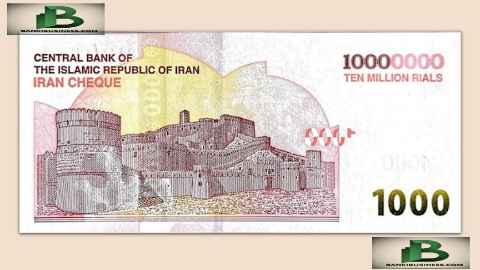
The newly introduced 10 million rial banknote is valued at approximately $7, reflecting the significant depreciation of Iran’s currency over time. It replaces the previous highest denomination, the 5 million rial note, which was introduced just a few months earlier.
The design of the new note reflects Iran’s cultural heritage. The front features the historic Jameh Mosque of Yazd, a 9th-century architectural landmark, while the back displays the Bam Citadel, a structure with over 2,500 years of history.
This design approach continues Iran’s recent trend of showcasing national monuments on its currency, rather than political figures, as seen in older banknotes.
Limited Access to Cash Despite New Currency
Although the introduction of the new banknote is meant to improve access to cash, many Iranians are still facing difficulties withdrawing sufficient funds.
Reports indicate that banks are rationing cash withdrawals due to limited supply. Some customers have shared experiences of waiting for long periods only to receive small amounts.
One elderly resident in Tehran reportedly waited over an hour at a bank, only to be initially offered a limited withdrawal amount. It was only after insisting that she needed cash urgently that she was allowed to withdraw a slightly higher amount.
Related Content





This situation highlights the growing strain on the country’s financial system as the war continues.
War Impact on Iran’s Financial Infrastructure
The ongoing conflict has placed additional pressure on Iran’s already fragile economy. Key infrastructure, including financial institutions, has been affected.
A notable incident involved a missile strike on a building belonging to Bank Sepah, one of the country’s major banks that serves both the public and the armed forces. The attack raised concerns about the stability and security of banking operations.
Although the bank has since restored some services, including ATM access and in-store card payments, online banking systems are still in the process of being fully reinstated.
This has contributed to the growing preference for cash transactions among citizens.
Inflation Crisis Worsens Economic Conditions
Iran’s economy was already under significant pressure before the current conflict began. Years of economic sanctions, declining oil revenues, and internal economic challenges have led to persistent inflation and currency devaluation.
Recent data shows that annual inflation stood at approximately 47.5 percent as of February, while food and beverage inflation surged beyond 100 percent. This has severely impacted the cost of living, making basic necessities increasingly expensive for the average citizen.
The removal of subsidized foreign exchange for essential imports has further worsened the situation, leading to higher prices for imported goods and increased financial strain on households.
Currency Devaluation and Exchange Rate Volatility
The Iranian rial has experienced significant volatility over the past year. Following a previous conflict, the currency lost nearly 40 percent of its value, highlighting the fragile nature of the economy.
Ahead of the current war, the rial weakened to a record low of about 1.66 million rials per US dollar. However, recent developments have seen a slight recovery, with the exchange rate improving to around 1.5 million rials per dollar.
This temporary strengthening is largely attributed to reduced foreign trade activity, fewer international transactions, and increased demand for local currency as citizens prioritize immediate financial needs.
Government Efforts to Stabilize the Economy
In response to the economic challenges, the Iranian government has implemented several measures aimed at stabilizing the financial system.
One of these includes a long-term plan to remove four zeros from the currency over a five-year period. This move is intended to simplify financial transactions and reduce the cost of printing high-denomination banknotes.
Additionally, the government has introduced a food voucher program that provides monthly credit to millions of citizens, allowing them to purchase essential goods at designated stores.
These measures are part of broader efforts to manage inflation and support the population during a period of economic and geopolitical uncertainty.
Seasonal Demand Adds to Cash Pressure
The demand for cash is also being driven by seasonal factors. The current period coincides with preparations for Nowruz, the Persian New Year, during which it is customary for families to give cash gifts to children and relatives.
This cultural practice typically leads to increased cash withdrawals even under normal circumstances. Combined with the ongoing war and economic instability, the demand has risen sharply this year.
Foreign Exchange Market Under Pressure
The foreign exchange market in Iran is also experiencing shifts in behavior. With uncertainty surrounding the economy, fewer people are purchasing foreign currency, while others are selling their holdings to meet urgent financial needs.
Market participants report a decrease in supply, as individuals who prefer to hold stable currencies are choosing to wait rather than sell. At the same time, demand is driven mainly by those facing immediate expenses.
This imbalance has contributed to fluctuations in exchange rates and added another layer of complexity to the economic situation.
What This Means for the Future
The introduction of the 10 million rial banknote is a clear indication of the scale of inflation and economic pressure facing Iran. While it may provide short-term relief by improving access to cash, it also highlights deeper structural challenges within the economy.
As the conflict continues, the ability of the financial system to maintain stability will remain a key concern. For citizens, businesses, and policymakers, the coming weeks will be critical in determining how the situation evolves.
Conclusion
Iran’s decision to introduce its highest-ever banknote reflects more than just a monetary adjustment. It is a response to a complex mix of war, inflation, and economic uncertainty.
While authorities are working to maintain access to cash and stabilize financial systems, the broader challenges facing the economy remain significant. The situation serves as a reminder of how quickly economic conditions can shift during times of conflict.
For observers and financial analysts, Iran’s current experience offers valuable lessons on the relationship between geopolitical tension, inflation, and monetary policy.