The Central Bank of Nigeria has issued a strong warning to the public over the increasing circulation of fraudulent messages, emails, and online communications falsely claiming to originate from the apex bank.
In an official press release dated April 21, 2026, the CBN disclosed that these deceptive messages are designed to misinform Nigerians and trick unsuspecting individuals into revealing sensitive personal and financial information.
According to the statement signed by Hakama Sidi Ali, Acting Director of Corporate Communications, the fraudulent messages often urge recipients to click suspicious links and contain false claims about the bank’s leadership, licensing activities, and policy decisions.
Related Content





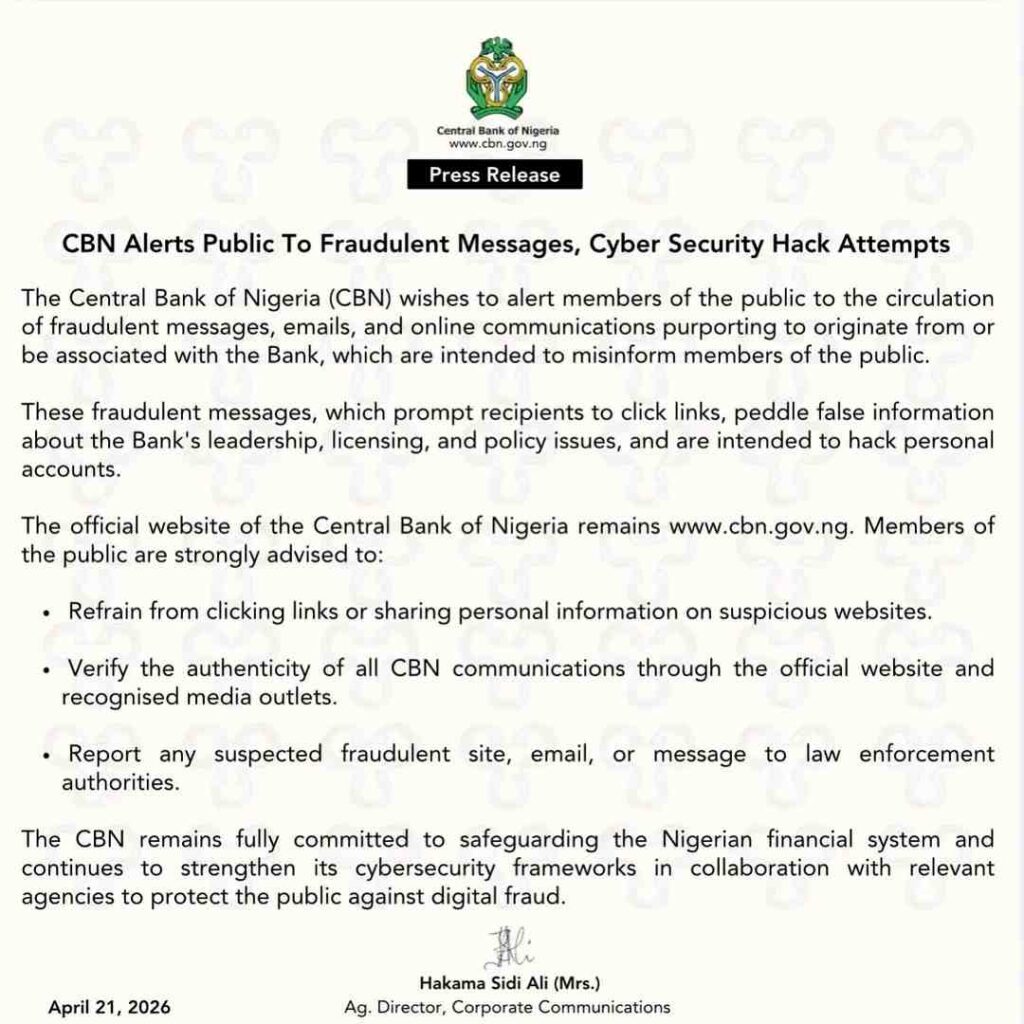
The apex bank emphasized that such communications are part of ongoing cyberattack attempts aimed at gaining unauthorized access to personal accounts.
The CBN further clarified that its only official website remains www.cbn.gov.ng, urging Nigerians to rely strictly on verified platforms for accurate information.
Public Advisory from CBN
To stay safe, the CBN advised Nigerians to:
- Avoid clicking on unknown or suspicious links
- Never share personal or banking details on unverified websites
- Confirm all CBN-related information through official channels and trusted media
- Report any suspicious messages, emails, or websites to law enforcement authorities
The bank reassured the public of its commitment to protecting Nigeria’s financial system, noting that it continues to strengthen its cybersecurity systems in collaboration with relevant agencies.
Rising Cyber Fraud Concerns
This warning comes amid growing concerns over digital fraud in Nigeria, as cybercriminals increasingly exploit public trust in financial institutions to carry out scams.
Industry experts say the trend highlights the need for increased awareness, digital literacy, and stricter cybersecurity measures across the banking sector.
Conclusion
The CBN urged all Nigerians to remain vigilant and cautious when dealing with financial information online, stressing that protecting personal data is a shared responsibility between institutions and the public.