There was a time in Nigeria when the Automated Teller Machine (ATM) was the greatest innovation in banking. It changed how people accessed cash. It reduced congestion inside banking halls. It gave customers a sense of independence. You could withdraw your money without filling withdrawal slips or waiting endlessly inside the bank.
But today, things have changed.
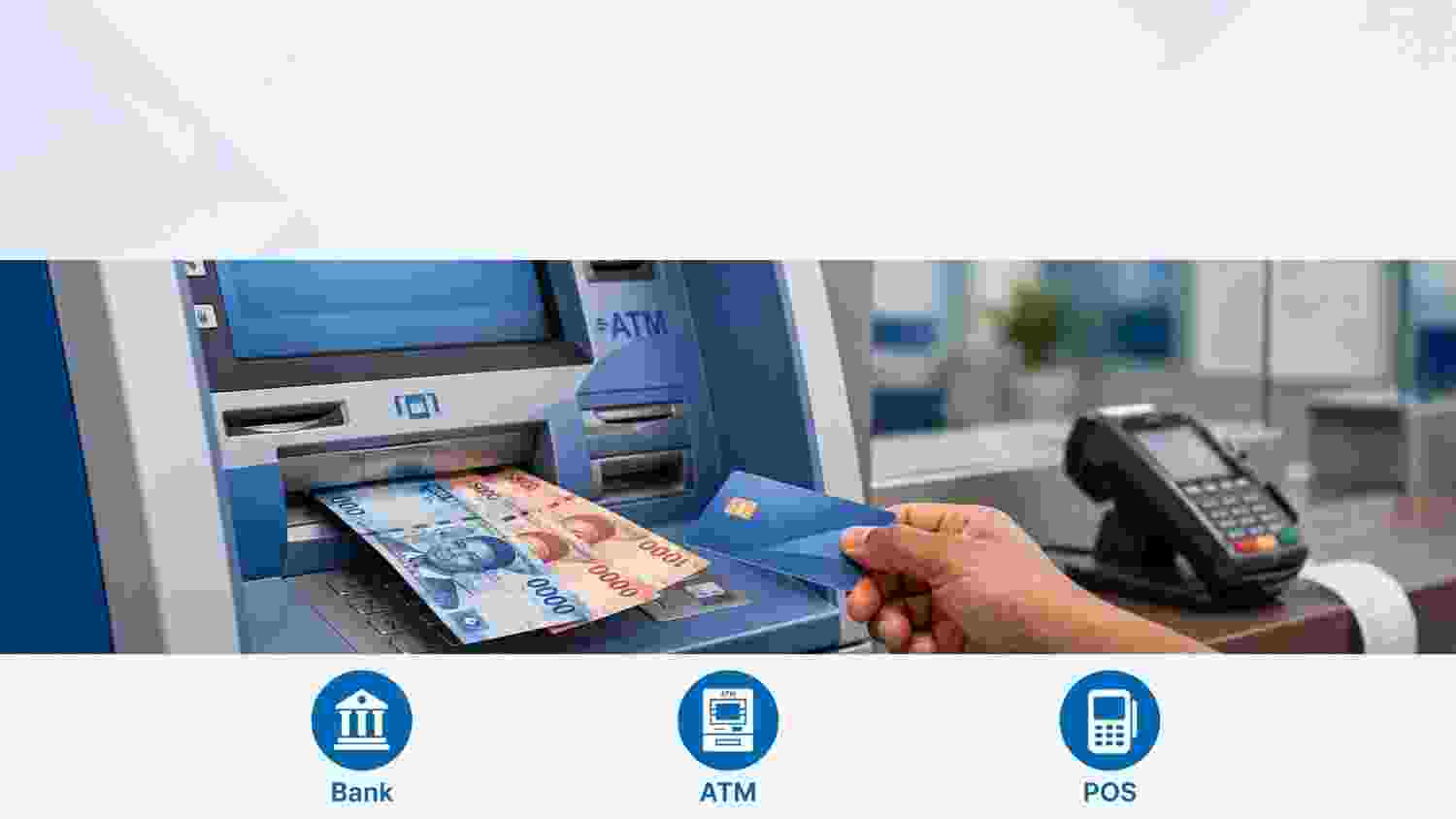
ATM is no longer the king of withdrawals in Nigeria. The rise of POS (Point of Sale) agents has quietly shifted power away from bank-controlled machines to street-level financial entrepreneurs. What happened? How did ATM move from being a revolutionary banking tool to becoming almost secondary in daily transactions?
As someone deeply involved in Nigeria’s financial education and POS ecosystem, let me break this down properly.
The Early Days of ATM in Nigeria

When ATM machines were introduced in Nigeria in the early 2000s, many banks did not initially treat them as a serious revenue channel. They were viewed more as a customer service innovation than a profit center. At that time, most Nigerians were used to physically entering banking halls to conduct withdrawals.
The ATM offered convenience. You could withdraw cash outside banking hours. You did not need to fill forms. You avoided the stress of long internal queues.
However, in the beginning, banks were not making significant income from ATM usage. That changed when withdrawal charges were introduced.
The ₦65 Withdrawal Charge and the Revenue Boom
After the introduction of ATM withdrawal charges, banks began charging ₦65 per withdrawal after the free monthly limit, the ATM quickly transformed from a service tool into a revenue machine.
Consider the mathematics. Millions of Nigerians withdrawing money daily. Each transaction attracting a charge. Even if a single customer pays only ₦65, when multiplied by millions of users nationwide, the figure becomes massive.
Reports indicated that Nigerian banks were generating up to ₦90 billion annually from ATM withdrawal charges alone at a certain period. That was not small money. It became a steady and predictable revenue stream.
As a result, banks aggressively expanded ATM deployment. Branches that once had one or two machines increased to five, eight, or even ten ATM points. The objective was clear: encourage customers to use machines instead of human tellers.
How Banks Pushed Customers Toward ATM Usage

During that period, if you walked into a bank to withdraw cash, staff often redirected you outside to use the ATM. Counter withdrawals were subtly discouraged except for large amounts or special cases.
From an operational perspective, it made sense. ATM transactions reduced workload inside the banking hall. It lowered staff pressure. It automated cash handling. And most importantly, it generated transaction-based revenue.
But there was a major oversight.
Customer experience was not properly managed.
The ATM Queue Problem

As ATM usage increased, infrastructure did not improve proportionally. Network reliability became a major issue. Cash loading was inconsistent. Maintenance was poor in some locations.
Customers began facing serious problems:
- Long queues under the hot sun
- Machines running out of cash
- “Interswitch error” messages
- “Temporarily unable to dispense cash” notifications
- Debits without payment
Time wastage became normal. Frustration increased. Arguments frequently occurred at ATM points. In some cases, physical altercations happened due to queue jumping or machine failure.
Instead of aggressively investing in network upgrades, redundancy systems, and queue management solutions, many banks appeared comfortable with the revenue being generated. The urgency to improve customer experience was not strong enough.
Related Content


And in business, when customer frustration continues without improvement, disruption is inevitable.
The Nigerian Spirit: When Systems Fail, People Innovate
One thing about Nigerians is this: when a system fails to serve us, we create alternatives.
When electricity supply became unreliable, people bought generators.
When public security became uncertain in some areas, communities hired vigilantes.
When ATM stress became unbearable, Nigerians created the POS business model.
POS machines were originally meant for merchants to accept card payments. But entrepreneurs quickly realized something powerful: they could use POS terminals to provide cash withdrawal services directly to people in their neighborhoods.
This was not a government initiative. It was not a policy innovation from bank CEOs. It was grassroots financial adaptation.
The Rise of POS Agents Across Nigeria
POS agents began appearing on streets, in kiosks, inside small shops, and at junctions. What made POS attractive was simple:
- Speed
- Accessibility
- Proximity
- Human interaction
Instead of standing in a long ATM queue, customers could walk a few steps to a nearby POS agent and withdraw money within minutes.
Yes, POS charges are often higher than ATM charges. But customers were willing to pay the extra fee because they were buying convenience and saving time.
Time has value. Stress has cost. Nigerians calculated that the small additional charge was worth it.
Today, POS points are everywhere. In some areas, you will see multiple POS stands within a short walking distance. In many communities, POS outlets are more visible than ATM machines.
This shift happened quietly but powerfully.
What Banks Lost in the Process
As POS adoption grew, ATM usage reduced in many urban and semi-urban areas. This directly affected the transaction-based income banks were generating from ATM withdrawals.
The revenue that once came directly to banks through ATM charges began spreading across:
- POS agents
- Super agents
- Fintech companies
- Payment processors
The ecosystem changed. Value moved from centralized bank-controlled machines to decentralized street-level operators.
Banks did not disappear. But their monopoly over convenient cash withdrawal reduced significantly.
This is a classic example of what happens when innovation slows down while customer frustration increases.
A Bigger Lesson for Nigerian Businesses
The ATM story teaches a powerful lesson for anyone in business.
When you introduce innovation and customers adopt it, that is not the end. It is only the beginning. If you stop improving, someone else will improve on your idea.
Banks introduced ATM to reduce stress. But when they ignored operational challenges and prioritized revenue over convenience, an opportunity opened.
POS agents stepped in.
In business, yesterday’s innovation can become today’s outdated model if it is not constantly upgraded.
This lesson applies beyond banking. It applies to:
- Fintech startups
- POS agents
- Online businesses
- Retail stores
- Even content creators
If you do not continuously improve customer experience, someone else will.
Is ATM Completely Dead?
No.
ATM is not completely dead. It still plays an important role, especially for large withdrawals and in certain locations. Many customers still use ATM for balance checks and transfers.
However, its dominance in everyday small cash withdrawals has significantly reduced compared to a decade ago.
The emotional attachment Nigerians once had to ATM as a “modern miracle” has shifted toward POS convenience.
That shift is the real story.
The Future of Banks in Nigeria
Some people now speculate that if traditional banks do not continue evolving, fintech companies and decentralized agents may continue to reduce their influence.
However, banks still control critical infrastructure:
- Customer deposits
- Regulatory compliance
- Core banking systems
- Large-scale lending
The real competition now is not between banks and ATM. It is between traditional banking models and flexible fintech-driven systems.
Banks that adapt, digitize properly, and prioritize seamless user experience will survive and grow. Those that rely on old systems without innovation may gradually lose relevance.
Conclusion
The era of ATM as the dominant withdrawal channel in Nigeria has largely passed. POS agents solved a real problem that banks did not solve quickly enough.
The lesson is simple and powerful:
In business, you either improve constantly or risk being replaced.
Innovation is not a one-time event. It is a continuous responsibility.
For anyone building a business today — whether in POS, fintech, retail, or digital services — remember this ATM story. Serve customers well. Reduce their stress. Respect their time. Improve your systems consistently.
Because the moment you stop improving, someone else somewhere is already building your replacement.
And in Nigeria, innovation never sleeps.