Imagine waking up one morning and hearing that one of the biggest banks in Kenya is in serious financial trouble.
At first, you may think it is only a problem for people who have accounts with that bank. But the situation can quickly become much bigger.
Businesses may struggle to receive or make payments. Other banks could be affected because they have money and transactions connected to the troubled institution. Customers could rush to withdraw their savings, while investors and businesses could start losing confidence in the wider financial system.
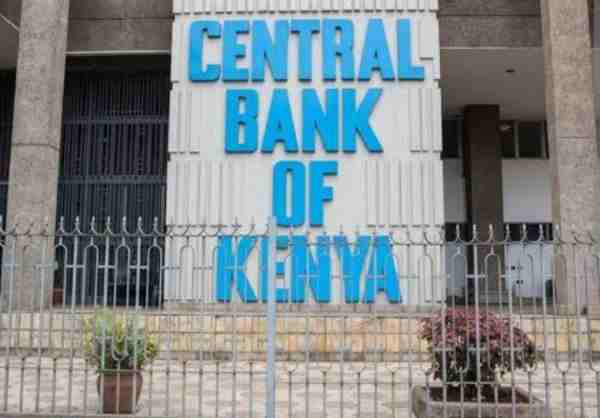
That is the kind of risk the Central Bank of Kenya (CBK) is trying to reduce with a new proposed framework for identifying and supervising Domestic Systemically Important Banks, or D-SIBs.
The regulator has opened the framework for public comments as part of a broader review of Kenya’s banking rules. The proposed system would give the CBK a clearer way to identify banks whose failure could cause serious disruption to the financial system and the wider economy.
No bank has been officially designated as a D-SIB under this new framework yet.
The proposal is still being considered, and members of the public have until November 7, 2026, to submit their comments to the CBK.
But if the framework is adopted, Kenya’s largest and most interconnected banks could face higher capital requirements, more frequent stress tests and much closer supervision.
What Is a D-SIB?
D-SIB means Domestic Systemically Important Bank.
The easiest way to understand the term is to think about a bank that is so large, so connected to other financial institutions, or so important to the economy that its failure could cause problems far beyond its own customers.
The CBK’s draft framework defines systemically important financial institutions as institutions whose distress or disorderly failure could significantly disrupt the wider financial system and economic activity.
In simple terms:
A D-SIB is a bank that the regulator believes could cause serious problems for the economy if it failed.
This does not mean that the bank is failing.
It does not mean the bank is unsafe.
It means the consequences of its failure could be large enough that the regulator wants it to maintain stronger protection against major financial shocks.
Why Is CBK Introducing This Framework?
The idea comes from lessons learned during major financial crises around the world.
The global financial crisis of 2007–2009 showed how the failure of large, interconnected and complicated financial institutions could spread problems throughout the financial system.
The CBK’s draft framework says the D-SIB approach is intended to reduce the likelihood of failure, provide additional capital to absorb losses and reduce the need for public-sector support when a systemically important bank experiences severe financial stress.
The proposal is also designed around international principles developed by the Basel Committee on Banking Supervision.
But Kenya is not simply copying another country’s system.
The CBK has adapted the methodology to reflect Kenya’s own banking system and economy.
How Will CBK Decide Which Banks Are Systemically Important?
This is one of the most important parts of the proposal.
The CBK will assess banks using an indicator-based measurement approach, together with a bucketing system and supervisory judgement.
The draft framework uses five major indicators:
- Size
- Interconnectedness
- Substitutability
- Complexity
- Importance to the domestic economy
Each factor has a different weight in the final assessment.
Proposed D-SIB Assessment Weights
| Indicator | Weight |
|---|---|
| Size | 40% |
| Interconnectedness | 30% |
| Substitutability | 15% |
| Complexity | 5% |
| Importance to domestic economy | 10% |
| Total | 100% |
The weighting shows that size and interconnectedness together account for 70% of the overall score.
That makes sense because a very large bank with extensive connections to other financial institutions can potentially transmit financial problems more widely.
1. Size
Size is the largest component of the proposed assessment, carrying a 40% weight.
The CBK says the larger a bank is, the greater the potential damage from its failure.
For the assessment, the regulator proposes using a bank’s leverage-ratio exposure measure compared with the aggregate exposure measure for all banks in Kenya.
In simple English, the regulator wants to know:
How big is this bank compared with the entire banking system?
A bank that represents a significant portion of the sector would naturally receive a higher systemic-importance score under this measure.
2. Interconnectedness
The second-largest factor is interconnectedness, with a 30% weight.
This looks at how closely a bank is connected to other financial institutions.
A bank may have large deposits with other banks, owe money to other banks or participate heavily in interbank and money-market transactions.
If such a bank gets into serious trouble, its problems could therefore spread to other institutions.
The proposed framework measures interconnectedness using deposits and balances due from local banking institutions and deposits and balances due to local banking institutions.
This is important because a bank can be systemically important not only because it is large but because it is deeply connected to the rest of the financial system.
3. Substitutability
The third factor is substitutability, which carries a 15% weight.
This asks a simple question:
If this bank suddenly disappeared, how easily could another bank provide the same services?
Some financial institutions perform activities that are difficult to replace quickly.
For example, a bank may handle a significant amount of payments or provide substantial financing to important sectors of the economy.
The CBK’s draft framework proposes looking at lending to households, lending to the trade sector and payments cleared and settled through payment systems, including RTGS transactions.
A bank that performs a role that other institutions cannot easily replace could therefore be considered more systemically important.
4. Complexity
Complexity carries a smaller 5% weight, but it remains part of the assessment.
The idea is straightforward.
The more complicated a bank’s business, financial structure and operations are, the harder and potentially more expensive it can be for authorities to deal with if the institution gets into serious trouble.
The CBK proposes considering financial securities as well as financial derivative assets and liabilities when assessing complexity.
This is why two banks of similar size may not necessarily have exactly the same systemic-risk profile.
5. Importance to the Domestic Economy
The fifth indicator is Importance to the Domestic Economy, or IDE.
This carries a 10% weight.
The CBK proposes measuring this using two components:
- customer deposits
- the bank’s total assets relative to Kenya’s GDP
Each component receives half of the IDE score.
The reasoning is that a bank with a major presence in the domestic economy can have a larger impact if it experiences severe financial problems.
How the D-SIB Score Will Be Calculated
The proposed overall score is:
40% Size + 30% Interconnectedness + 15% Substitutability + 5% Complexity + 10% Importance to Domestic Economy
This produces a total score for each institution.
The CBK’s proposed threshold for systemic importance is a total score above 0.25 and/or a category score above 0.05.
The regulator will also use supervisory judgement when determining the appropriate response.
This means the calculation will not simply be a case of putting numbers into a formula and automatically labelling every bank above a particular figure in exactly the same way.
What Happens After a Bank Is Identified as a D-SIB?
This is where the proposal becomes particularly important for banks.
A designated D-SIB would be required to maintain additional Common Equity Tier 1 (CET1) capital.
CET1 is a form of high-quality bank capital that is designed to absorb losses.
The idea is simple:
If a bank is considered more important to the financial system, it should have a larger financial cushion available when things go wrong.
The proposed additional requirement ranges from 0.5% to 2.5% of risk-weighted assets, depending on the bank’s systemic-importance bucket.
Proposed D-SIB Capital Requirements
| D-SIB Bucket | Total Score | Additional CET1 Requirement |
|---|---|---|
| Bucket 1 | >0.05 to ≤0.15 | 0.5% of RWA |
| Bucket 2 | >0.15 to ≤0.25 | 1.5% of RWA |
| Bucket 3 | >0.25 | 2.5% of RWA |
RWA means risk-weighted assets.
The higher the systemic importance, the larger the additional capital buffer.
The highest proposed category would therefore require an additional CET1 buffer of 2.5% of risk-weighted assets.
Why Does the Extra Capital Matter?
Imagine a bank has a major loan portfolio and some of its borrowers suddenly begin defaulting.
Losses could reduce the bank’s capital.
If the bank already has a stronger capital cushion, it has more capacity to absorb those losses without immediately becoming unstable.
That is the main purpose of the proposed D-SIB capital requirement.
The CBK says the additional capital is intended to reduce the probability of failure, provide a buffer during periods of stress and reduce the need for public-sector support if a bank experiences financial distress.
Kenya’s Banking Sector Is Already Well Capitalised
The proposed D-SIB framework comes at a time when the broader Kenyan banking sector remains above its existing minimum capital and liquidity requirements.
CBK data shows that the banking sector’s total capital adequacy ratio stood at 20.0% in June, compared with the statutory minimum of 14.5%.
The sector’s liquidity ratio stood at 61.2%, well above the minimum requirement of 20%.
Kenya Banking Sector Capital and Liquidity
| Indicator | June figure | Regulatory minimum |
|---|---|---|
| Total capital adequacy ratio | 20.0% | 14.5% |
| Liquidity ratio | 61.2% | 20.0% |
These figures show that the proposed D-SIB framework is not being introduced because the entire banking sector is currently in crisis.
Instead, the proposal is about making the system more resilient and ensuring that banks capable of creating greater systemic risk have additional safeguards.
Kenya Is Also Raising Minimum Bank Capital
The D-SIB proposal comes alongside a separate effort to strengthen the capital base of commercial banks.
Kenya’s banking reforms have been progressively increasing the minimum core capital requirement for commercial banks.
The longer-term target is KSh10 billion by December 2029, with the increase being implemented in stages.
The initial milestone was KSh3 billion by the end of 2025.
The planned progression has been:
| Deadline | Minimum Core Capital |
|---|---|
| December 2025 | KSh3 billion |
| December 2026 | KSh5 billion |
| December 2027 | KSh6 billion |
| December 2028 | KSh8 billion |
| December 2029 | KSh10 billion |
This is separate from the proposed D-SIB additional capital buffer.
That distinction is important.
A bank has to meet the general capital requirements applicable to commercial banks. If it is later designated as a D-SIB, it would also face the additional systemic-risk capital requirement.
Four Banks Were Below the KSh3 Billion Threshold
Financial disclosures for the quarter ended March showed that four banks were still below the KSh3 billion minimum core-capital threshold at that point: Credit Bank, Consolidated Bank of Kenya, Development Bank of Kenya and Access Bank Kenya.
This highlights why capital requirements have become such an important issue in Kenya’s banking industry.
Banks that need additional capital may have to raise funds from shareholders, parent companies or other investors, retain earnings, restructure their businesses or pursue strategic transactions.
The situation also helps explain why regulators are paying close attention to the strength and resilience of individual institutions.
What New Supervision Would D-SIBs Face?
Higher capital is only one part of the proposed framework.
D-SIBs would also face enhanced supervision.
The CBK proposes more intensive and more frequent supervision, including deeper examinations and closer monitoring of key performance indicators.
The regulator would also increase its interaction with the boards, audit committees and risk committees of designated banks.
In simple terms:
The bigger the systemic risk, the closer the regulator wants to watch the bank.
D-SIBs Would Face Quarterly Stress Tests
Another major proposal is quarterly stress testing.
Stress testing involves asking:
What happens to this bank if the economy suddenly experiences a serious shock?
For example, regulators can examine how a bank might cope with:
- large loan defaults
- a major economic slowdown
- liquidity pressure
- market shocks
- changes in financial conditions
- other severe economic events
Under the proposed framework, D-SIBs would conduct stress tests every quarter to assess their ability to absorb a range of economic and financial shocks.
They would also be required to conduct their Internal Capital Adequacy Assessment Process and Internal Liquidity Adequacy Assessment Process at least annually, with the results reviewed by the CBK.
Banks Would Need Recovery and Resolution Plans
The proposal also requires D-SIBs to prepare recovery and resolution plans.
These two terms may sound complicated, but the idea is relatively simple.
Recovery plan
A recovery plan explains what the bank’s management could do if the bank comes under severe financial pressure.
It is essentially a plan for getting the institution back to safety.
Resolution plan
A resolution plan deals with what could happen if the bank becomes unable to continue operating normally and authorities need to manage its failure.
The objective is to reduce the damage to customers, other financial institutions and the wider economy.
Under the draft framework, D-SIBs would have to update and submit their recovery and resolution plans to the CBK every year by April 30.
The regulator wants these plans to exist before a crisis happens, rather than being created when the bank is already in trouble.
When Will Kenya Know Which Banks Are D-SIBs?
The framework proposes an annual assessment.
The assessment would be conducted as at December 31 each year using data from institutions licensed by the CBK.
Banks identified as D-SIBs would then be notified by the end of March.
The list would subsequently be published by June.
That means the designation is not intended to be permanent.
A bank’s systemic importance can change.
If its score falls below the relevant threshold in a later assessment, the bank could be removed from the D-SIB list.
Similarly, if its systemic importance increases, it could move into a higher capital bucket.
D-SIBs Would Get Time to Meet the New Capital Requirement
A bank would not necessarily be expected to find the entire additional capital immediately after being designated.
The draft framework proposes a transition period of up to 12 months for newly designated D-SIBs and banks moving into a higher capital bucket.
The bank would also have to submit a board-approved action plan within three months explaining how it intends to meet the additional capital requirement.
This gives banks time to plan their capital raising rather than forcing an immediate adjustment.
What Does This Mean for Kenya’s Biggest Banks?
The proposal could have several effects.
Large banks may need to maintain additional capital once they are designated as D-SIBs.
That could affect how much capital is available for other activities.
A bank may need to balance:
- lending growth
- dividend payments
- capital retention
- expansion
- acquisitions
- investment
- regulatory capital requirements
For shareholders, this could become an important issue.
A bank that needs to retain more earnings to strengthen its capital position may have less flexibility when it comes to distributing profits as dividends.
At the same time, stronger capital can make the bank more resilient and potentially reduce the risk of severe financial distress.
So the effect is not simply negative or positive.
It is a trade-off between maintaining stronger protection and having more flexibility to deploy capital.
Could the New Rules Affect Bank Customers?
For ordinary customers, the main objective is greater financial stability.
If banks have stronger capital buffers and better crisis plans, they should be better positioned to absorb serious financial shocks.
The proposed framework is therefore not simply about making life harder for large banks.
It is about reducing the possibility that problems at one major institution could spread throughout the financial system.
The CBK says its D-SIB measures are intended to reduce the probability and impact of failure, reduce public-sector costs and address the advantage that very large banks can receive from being perceived as “too big to fail.”
Could the Rules Affect Investors?
Yes.
Investors in listed banks will likely pay attention to which institutions are eventually classified as D-SIBs and which capital bucket they fall into.
The designation itself does not mean a bank is a bad investment.
In fact, being identified as systemically important can also show that the bank has a significant role in the financial system.
But the additional capital requirements could influence how management allocates earnings.
For example, a bank facing a higher capital requirement may need to retain more profits instead of distributing all available earnings to shareholders.
Investors may therefore watch:
- dividend policies
- capital raising
- return on equity
- loan growth
- profitability
- capital adequacy
- acquisitions
- balance-sheet growth
The market will ultimately decide how investors value the effect of the new rules.
Will the New Rules Stop a Bank From Failing?
No regulation can completely eliminate the possibility of a bank failure.
The purpose is to make failure less likely and, if a major bank does experience serious problems, make the consequences easier to manage.
That is why the proposal combines:
higher capital + stronger supervision + stress testing + recovery planning + resolution planning.
The CBK wants banks to prepare for severe scenarios before those scenarios actually happen.
Is CBK Saying Kenya’s Big Banks Are in Trouble?
No.
This is an important point.
The publication of the proposed D-SIB framework should not be interpreted as an announcement that Kenya’s largest banks are currently failing.
The CBK’s latest sector data describes the banking sector as stable and resilient, with capital and liquidity ratios above the statutory minimums.
The proposal is a regulatory framework for identifying institutions whose failure could have unusually large consequences.
Being designated a D-SIB would therefore be a classification based on systemic importance, not a declaration that a bank is financially weak.
When Will the D-SIB Rules Become Final?
They are not final yet.
The CBK issued the draft framework together with revised Prudential Guidelines, Risk Management Guidelines and Guidance Notes for public review.
The regulator opened the public participation process on September 10 and is accepting comments until November 7, 2026.
The final framework could therefore change after the consultation process.
This is why it is important to describe the current requirements as proposed rules, not as rules that banks are already fully subject to.
Key Numbers in the Proposed D-SIB Framework
| Item | Proposed requirement |
|---|---|
| Size weighting | 40% |
| Interconnectedness weighting | 30% |
| Substitutability weighting | 15% |
| Complexity weighting | 5% |
| Domestic economy importance | 10% |
| Highest additional CET1 buffer | 2.5% of RWA |
| Lowest D-SIB additional CET1 buffer | 0.5% of RWA |
| Stress testing | Quarterly |
| Recovery/resolution plan update | Annually |
| Plan submission deadline | April 30 |
| D-SIB assessment | Annually |
| Public comment deadline | November 7, 2026 |
The figures come from the CBK’s draft D-SIB framework and public notice.
What Happens Next?
For now, the framework remains a proposal.
The next major step is the public consultation.
The CBK is asking members of the public and stakeholders to review the proposed framework and submit their comments.
The regulator says comments should be submitted by November 7, 2026 using the prescribed template.
After the consultation process, the final regulatory framework will determine how the D-SIB system is ultimately implemented.
The banks that eventually qualify will then be assessed according to the approved methodology.
Why This Matters for Kenya’s Banking Industry
Kenya already has a relatively strong banking regulatory structure, with requirements covering capital, liquidity, risk management and supervision.
The proposed D-SIB framework takes that a step further by recognising that not all banks create the same level of systemic risk.
A small bank and one of the country’s largest banks can both experience financial problems, but the consequences of their failures may be very different.
If a small institution fails, the impact may be largely contained.
If a huge and highly interconnected institution fails, the effects could spread through payment systems, other banks, businesses and households.
That is the central reason behind the D-SIB proposal.
The goal is not to prevent large banks from growing.
It is to make sure that the banks whose problems could affect the entire economy have enough capital, supervision and crisis-planning arrangements to withstand major shocks.
Conclusion
The Central Bank of Kenya is proposing tougher rules for banks that could pose a significant risk to the country’s financial system if they failed.
Under the draft framework, banks would be assessed using five main measures: size, interconnectedness, substitutability, complexity and importance to the domestic economy.
The most heavily weighted factors are size and interconnectedness, which together account for 70% of the proposed score.
Banks eventually designated as D-SIBs would face additional CET1 capital requirements ranging from 0.5% to 2.5% of risk-weighted assets, depending on their level of systemic importance. They would also face closer supervision, quarterly stress tests and annual recovery and resolution planning.
At the same time, Kenya’s banking sector remains above the existing minimum capital and liquidity requirements, with total capital adequacy at 20.0% and liquidity at 61.2% in June.
So this is not a story about Kenya’s biggest banks suddenly being in trouble.
It is a story about the regulator preparing for the possibility that problems at a major bank could affect much more than that bank alone.
The proposed framework is still under consultation, and no bank has yet been formally designated a D-SIB under the new framework.
The public has until November 7 to submit comments before the next stage of the regulatory process.